Top Challenges Facing Small Medical Practices and How FutureMD Solutions Can Help
Running a small medical practice in 2026 is more demanding than ever. Independent physicians and healthcare providers are navigating an increasingly complex landscape shaped by evolving payer regulations, stricter compliance requirements, rising patient expectations, and rapid technological advancements.
At the heart of these challenges lies one critical component: Revenue Cycle Management (RCM) and having the right revenue cycle management software to handle it. When not managed efficiently, it can disrupt cash flow, increase claim denials, and create administrative chaos.
With limited resources, small practices often struggle to manage billing, coding, and compliance while maintaining quality care.
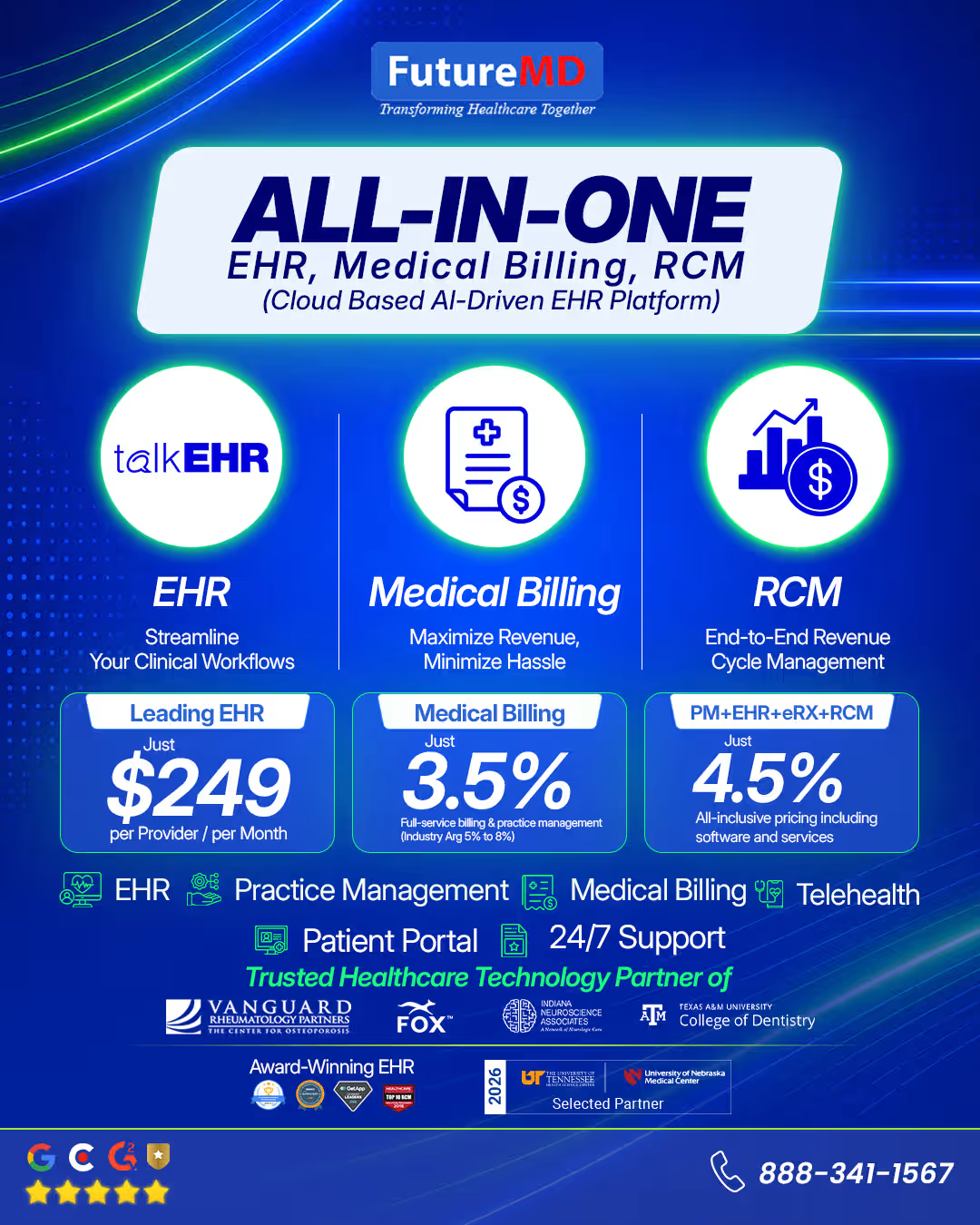
To stay competitive, practices need more than traditional tools; they need a smart, connected, and end-to-end solution. FutureMD is built to meet the growing demands of modern healthcare practices, combining advanced technology with industry expertise.
Let’s explore the top challenges small medical practices face in 2026 and how FutureMD helps solve them.
Key Challenges Small Medical Practices Face in 2026
Understanding the core issues that make managing a small medical practice more complex than ever.
1. Revenue Cycle Inefficiencies
Challenges
According to MGMA, physician practices spend an average of $99,000 per physician annually on prior authorization-related administrative work.
Managing the revenue cycle involves multiple interconnected steps, from patient registration and insurance verification to coding, billing, and payment collection. In small practices, these processes are often fragmented or manual, leading to:
- Frequent claim rejections and delays
- Coding errors or incomplete submissions
- Limited visibility into financial performance
- Inefficient workflows across systems
Prior authorization bottlenecks also create major delays for small practices. Many providers still rely on manual approval workflows, which slow down reimbursements and increase administrative burden. FutureMD’s prior authorization automation tools streamline approval requests and track approvals in real time, helping practices reduce turnaround times from days to hours.
Research from HIMSS shows that automated revenue cycle management tools can reduce claim denial rates by up to 30%.
Impact
- Unstable cash flow
- Lost revenue opportunities
- Lack of financial clarity
How FutureMD Solves This
FutureMD offers fully integrated revenue cycle management software that automates the entire financial workflow. With intelligent claim scrubbing, denial management software, and real-time analytics, practices can reduce errors, accelerate reimbursements, and gain clear insights into revenue performance.
2. Medical Billing and Coding Complexities
Challenges
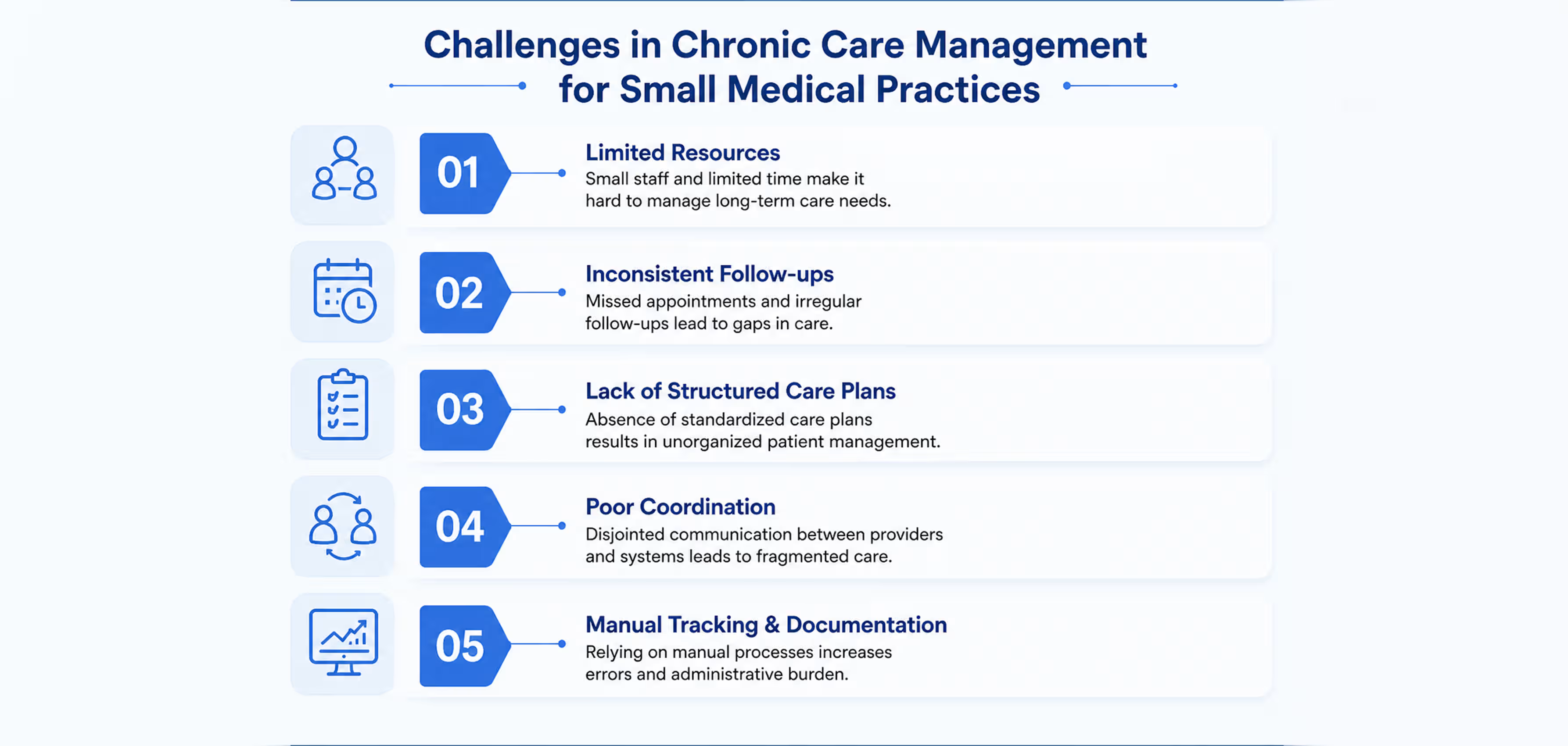
Accurate medical coding remains a constant struggle due to frequent updates in ICD-10, CPT, and payer-specific rules. Small practices often face:
- High denial rates due to coding errors
- Lack of trained billing staff
- Manual billing processes
- Difficulty keeping up with compliance changes
Impact
- Reduced revenue
- Increased compliance risks
- Higher administrative burden
How FutureMD Solves This
FutureMD combines automation with expert medical billing and coding support to ensure accurate coding and faster claim approvals. Our intelligent system minimizes errors and helps practices maintain compliance while improving first-pass claim acceptance rates.
3. Fragmented Clinical Workflows
Challenges
Many small practices rely on disconnected systems for scheduling, patient records, documentation, and billing. This leads to:
- Duplicate data entry
- Difficulty accessing patient information
- Inefficient communication between teams
- Time wasted on administrative tasks
Impact
- Lower productivity
- Physician burnout
- Reduced quality of care
How FutureMD Solves This
FutureMD’s integrated small practice EHR software centralizes patient data and synchronizes workflows in real time. Providers can access complete patient records instantly, streamline documentation, and improve care coordination, all from a single system.
4. Inefficient Practice Operations
Challenges
Manual processes and a lack of integration often make daily operations slow and disorganized. Common issues include:
- Manual appointment scheduling
- Poor coordination between departments
- Limited operational insights
- High administrative workload
Impact
- Reduced efficiency
- Workflow bottlenecks
- Loss of productivity
How FutureMD Solves This
Our best medical practice management software unifies scheduling, billing, and operational tasks into one platform. With built-in analytics and reporting tools, practices can monitor performance, identify inefficiencies, and optimize daily operations.
5. Patient Experience Gaps
Challenges
Providing a seamless patient experience is difficult without modern tools. Small practices often struggle with:
- Disconnected communication channels
- Lack of personalization
- Inefficient appointment scheduling
- Limited digital engagement tools
Impact
- Lower patient satisfaction
- Increased no-shows
- Poor retention rates
How FutureMD Solves This
FutureMD enhances patient engagement through automated reminders, patient portals, and streamlined communication tools. By simplifying interactions and improving accessibility, practices can deliver a more consistent and satisfying patient experience.
6. Limited Access to Virtual Care Services
Challenges
While telehealth demand continues to grow, many small practices face barriers such as:
- Lack of infrastructure
- Limited technical expertise
- Poor integration with existing systems
- Difficulty maintaining continuity of care
Impact
- Missed opportunities for remote care
- Reduced accessibility for patients
- Gaps in treatment continuity
How FutureMD Solves This
FutureMD provides a fully integrated talkEHR telehealth software that enables secure virtual consultations. Providers can conduct video visits, access patient records, and document care in real time, all within a single platform, making remote care simple and efficient.
All of our solutions, including our HIPAA-compliant billing software, are designed with data security and compliance in mind
7. Administrative Burden and Staff Burnout
Challenges
Administrative tasks consume a large portion of staff time, including:
- Repetitive data entry
- Manual documentation
- Eligibility checks
- Scheduling coordination
Impact
- Staff burnout
- Increased operational costs
- Higher risk of errors
How FutureMD Solves This
FutureMD leverages automation and AI-driven tools to reduce administrative workload. From automated scheduling to digital intake and documentation, these solutions free up time for staff and allow providers to focus more on patient care.
8. Chronic Care Management Difficulties
Challenges
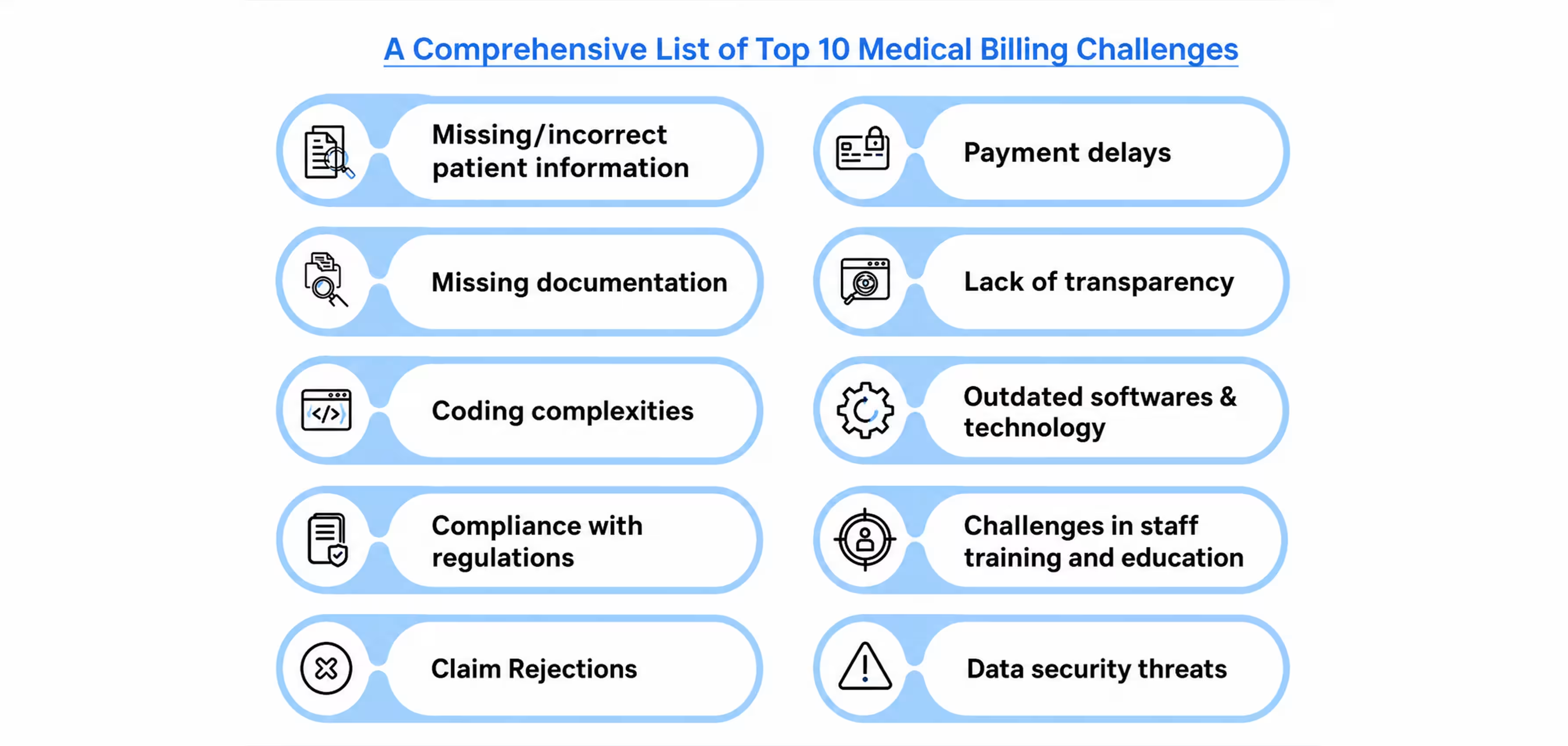
Managing chronic conditions requires ongoing monitoring and coordination, which can be difficult for small practices due to:
- Limited resources
- Inconsistent follow-ups
- Lack of structured care plans
- Poor coordination
Impact
- Poor patient outcomes
- Increased complications
- Higher healthcare costs
How FutureMD Solves This
FutureMD supports chronic care management through automated patient tracking, care coordination tools, and simplified billing processes. This ensures consistent follow-ups and improved long-term patient outcomes.
9. Remote Patient Monitoring Limitations
Challenges
Without proper tools, tracking patient health between visits is challenging. Common issues include:
- Lack of real-time health data
- Delayed identification of complications
- Data management difficulties
- Security concerns
Impact
- Increased hospital readmissions
- Delayed interventions
- Disrupted continuity of care
How FutureMD Solves This
FutureMD enables remote patient monitoring through connected devices and real-time data integration. Providers receive instant alerts on patient conditions, allowing timely interventions and better care management.
10. Physician Credentialing Delays
Challenges
Credentialing is a complex and time-consuming process involving multiple verifications and approvals. Small practices often face:
- Enrollment delays
- Administrative overload
- Slow onboarding
- Lack of coordination
Impact
- Delayed revenue generation
- Operational inefficiencies
- Slower practice growth
How FutureMD Solves This
FutureMD streamlines credentialing with automated workflows and expert support. From initial enrollment to ongoing monitoring, the platform ensures faster approvals and minimizes revenue delays.
FutureMD also provides physician credentialing services in Texas and across the U.S., helping practices accelerate payer enrollment and reduce onboarding delays.
Why an All-in-One Platform Beats Fragmented Solutions
Many small medical practices still rely on disconnected software tools for billing, scheduling, EHR, and telehealth. While these systems may solve individual problems, they often create workflow inefficiencies, duplicate data entry, and communication gaps. An integrated all-in-one platform like FutureMD simplifies operations by bringing everything into a single ecosystem.
| Feature | Legacy Tools | Fragmented Software | FutureMD |
|---|---|---|---|
| Billing | Separate | Multiple systems | Integrated |
| EHR | Limited | Disconnected | Unified |
| Telehealth | Extra cost | Third-party | Built-in |
| Reporting | Manual | Partial | Real-time |
The Future of Small Medical Practices
The challenges facing small medical practices in 2026 are significant, but they are not insurmountable. From revenue cycle inefficiencies to patient engagement gaps, each obstacle presents an opportunity for transformation.
FutureMD offers a comprehensive, all-in-one solution that integrates revenue cycle management software, EHR, practice management, and talkEHR telehealth, along with advanced automation tools, into a unified platform. By simplifying workflows, improving financial performance, and enhancing patient experiences, FutureMD empowers small practices to thrive in a competitive healthcare environment.
FutureMD also helps practices improve financial stability through advanced medical practice cash flow solutions that reduce delays and increase collection efficiency.
In a rapidly evolving industry, success depends on adopting smarter systems and more efficient processes. FutureMD stands out as a reliable partner for small practices looking to improve efficiency, reduce costs, and deliver better patient outcomes.
Schedule a free consultation today.
FAQs
Q1: What is revenue cycle management, and why does it matter for small practices?
Small practices with limited staff suffer directly when RCM is inefficient, resulting in cash flow problems, delayed reimbursements, and increased compliance risk. An automated RCM platform like FutureMD can reduce claim denial rates and accelerate collections.
Q2: How much does poor medical billing cost a small practice?
Industry estimates suggest small practices lose 15–20% of potential revenue annually due to billing errors, uncollected copays, and denied claims that are never resubmitted. One FTE for manual billing typically costs $50,000–$70,000/year.
Q3: What are the most common reasons for medical claim denials?
Top denial reasons: (1) incorrect or missing patient information, (2) coding errors, (3) lack of prior authorization, (4) duplicate claims, (5) service not covered by the patient's plan. Intelligent claim scrubbing software catches most before submission.
Q4: Is FutureMD HIPAA-compliant?
Yes. FutureMD includes encrypted data transmission, role-based access controls, audit logging, and a Business Associate Agreement (BAA) for all clients. All telehealth sessions and patient records are handled in a HIPAA-compliant environment.
Q5: How long does physician credentialing take?
Traditional credentialing takes 60–120 days per payer. FutureMD's automated credentialing workflows typically reduce turnaround to 30–45 days, minimizing revenue delays for new or transitioning providers.
Q6: What is the difference between an EHR and practice management software?
An EHR handles clinical documentation (charts, notes, prescriptions). Practice management software handles scheduling, billing, and insurance verification. FutureMD integrates both, eliminating duplicate entry and sync errors.
Q7: Can a small practice afford AI-powered healthcare software?
Yes. FutureMD offers scalable subscription pricing for solo and small group practices, typically paying for itself in recovered denied claims within the first few months.