talkEHR: Smarter Electronic Health Records
Optimize Performance with Advanced EHR Solutions
An EHR simply built for your nimble practice. Streamline your workflow, enhance patient care, and improve practice efficiency with our cutting-edge electronic health record system.
talkEHR has been ranked in Top Electronic Medical Records Software by Goodfirms
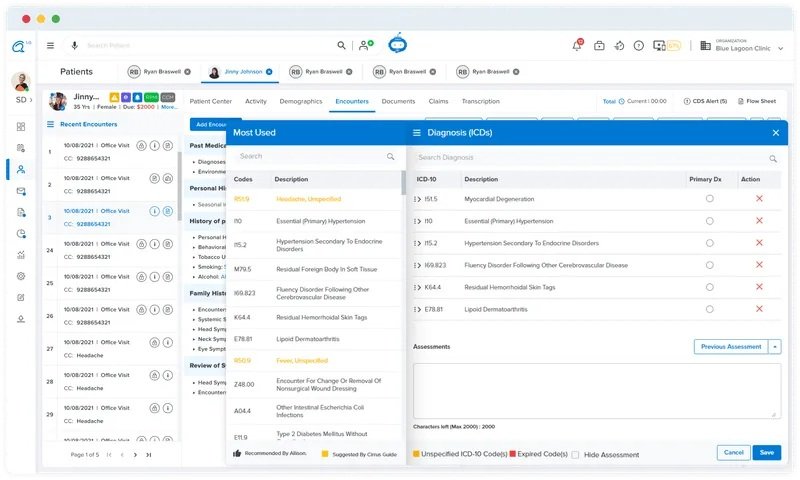
Simple, Powerful Charting
- Select from medical charting templates that are easily customizable
- 70+ customizable workflows and modules for your specialty
- Integrated dictation tool
- Chart while taking a telehealth visit
Why Choose Us?
Stay Connected
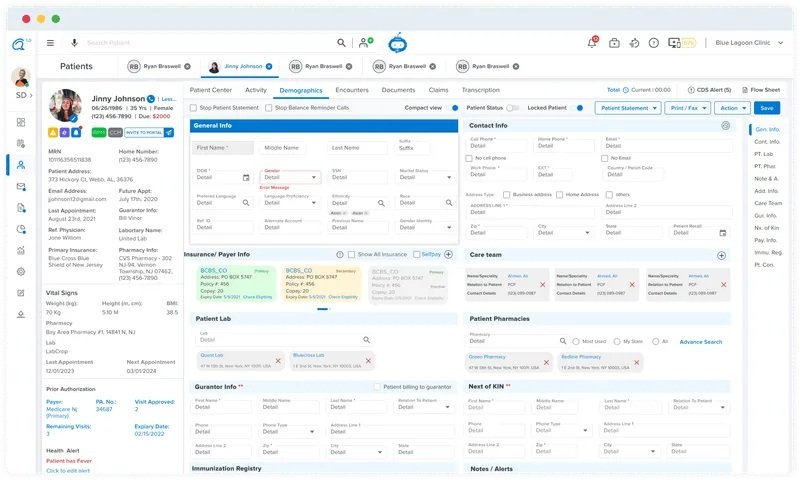
- Web-based platform - Access from any device
- Labs connected - Order tests and share results
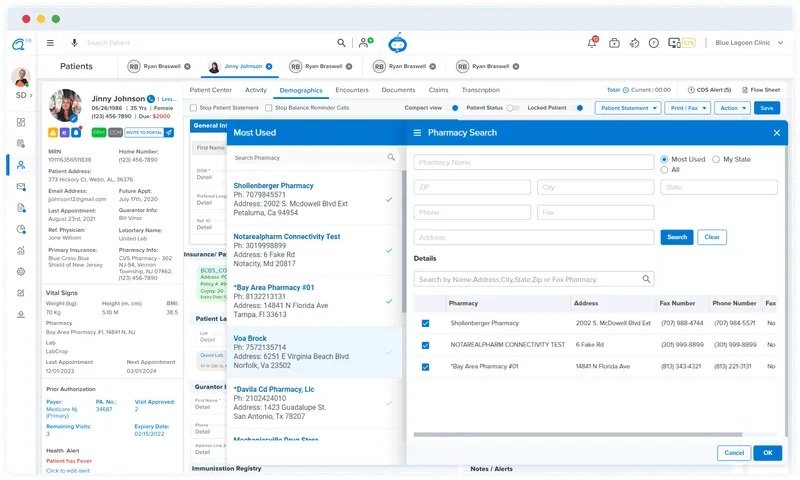
- ePrescribe within a network of pharmacies
Save Time And Money
Ensure Quality
- ONC-ACB MIPS/MACRA certified
- Automatic diagnosis predictions
- Secure messaging with patients
An EHR that works for you.

SIMPLE TO USE
A modern platform that works for your practice, not against it.

STAY INDEPENDENT
A solution built to be a natural extension of your workflow.

NIMBLE, YET AFFORDABLE
An all-in-one, feature-rich solution that won’t break the bank.
Testimonials
What Our Clients Say
Read how FutureMD is helping healthcare providers streamline their practice
Trusted by providers of all sizes to grow and scale their practices





Success Stories
Hear From Our Satisfied Clients
See how FutureMD is transforming healthcare practices across the country
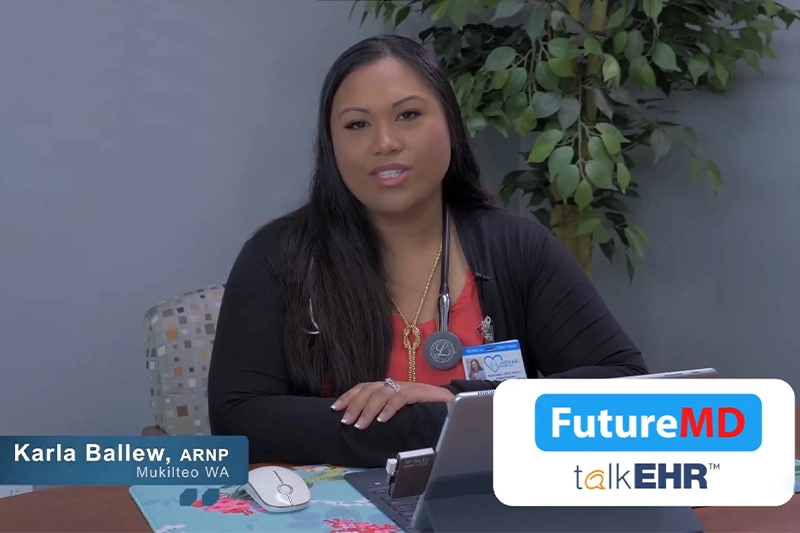
"Karla Ballou, an advanced nurse practitioner, shares her experience using FutureMD talkEHR, a mobile and clinician-friendly electronic health record system. From on-the-go dictation and electronic prescriptions to lab orders and embedded billing, see how this all-in-one platform helps her provide faster, organized, and efficient care for adult and geriatric patients."

Karla Ballou
Advanced Nurse Practitioner
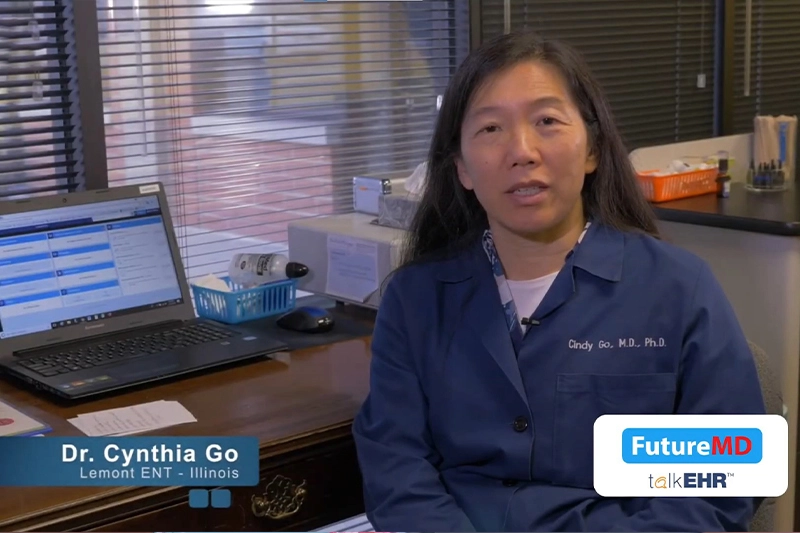
"Dr. Cynthia Goh, a solo otolaryngologist based in Lamont, Illinois, shares her experience with FutureMD talkEHR, the electronic health record system that's transformed her practice. Dr. Goh explains why she switched to talkEHR and how its powerful features have improved her workflow and patient care."

Dr. Cynthia Goh
Otolaryngologist, Lamont, Illinois
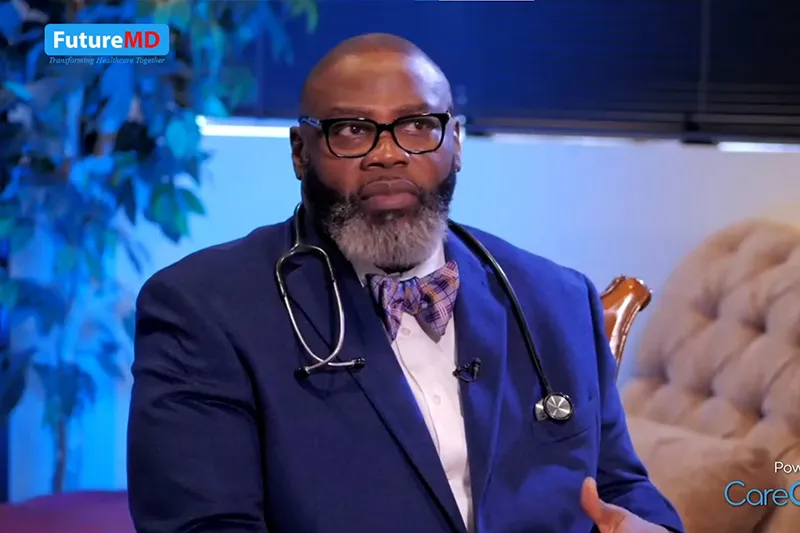
"Dr. Dwight Antonio Owens, a psychiatrist practicing in Atlanta for over 20 years, shares his real experience using talkEHR for psychiatry workflows, billing clarity, and telepsychiatry services."

Dr. Dwight Antonio Owens
Psychiatrist , Atlanta
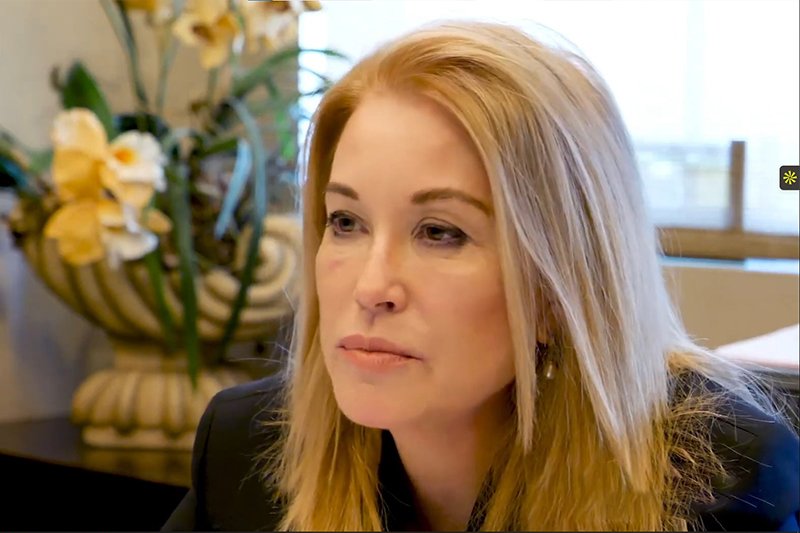
"Dr. Kathryn Eiserman-Rogers of Allergy Immunology Specialists in South Florida shares her experience with FutureMD Breeze, highlighting how the platform helped modernize practice workflows, improve profitability, simplify billing, and create a smoother, more transparent experience for patients."
Dr. Kathryn Eiserman-Rogers
Allergy Immunology Specialists , South Florida
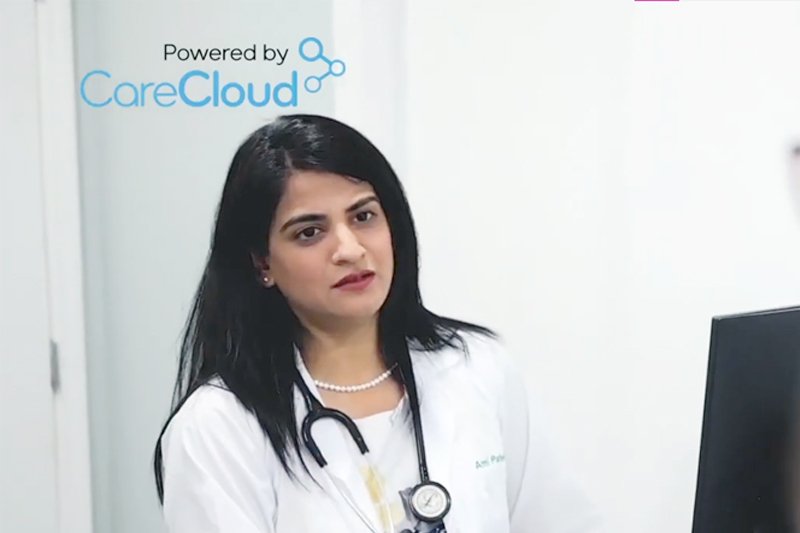
"“Ami Patel, a Nurse Practitioner, shares her experience with FutureMD cirrusAI, the AI-powered clinical assistant that’s transforming the way she documents and delivers care. Ami explains how FutureMD cirrusAI helps her streamline workflows, reduce administrative burden, and focus more on her patients."

Ami Patel
Nurse Practitoner
Award-winning solutions trusted by professionals across the industry



Frequently Asked Questions About Electronic Health Record (EHR)
AI-Powered Electronic Health Record Software for Smarter Clinical Decisions
FutureMD EHR/EMR software talkEHR, powered by CareCloud, and enhanced with AI-driven intelligence, is built for modern, agile medical practices that demand clinical precision, operational efficiency, and financial stability. In 2026, electronic health records EHR software have evolved beyond digital charts; they are the foundation that connects patient care, compliance, and revenue.
Our electronic health medical records platform is designed for healthcare providers who value structured clinical documentation without sacrificing workflow flexibility. By unifying clinical records, practice management, and billing alignment into one connected system, FutureMD helps providers reduce administrative burden, protect revenue, and maintain focus on patient care.
What Are Electronic Health Records (EHRs) and Electronic Medical Records (EMRs)?
Electronic Health Records (EHR) and Electronic Medical Records (EMR) are digital systems used to document, store, and manage patient clinical information.
While EMR traditionally refers to digital patient charts within a single practice, EHR extends beyond documentation to support interoperability, compliance, analytics, AI-driven insights, and revenue workflows.
FutureMD’s best EMR EHR software combines the strengths of both. It provides structured, audit-ready medical records while enabling seamless communication between providers, billing teams, labs, pharmacies, and payers, ensuring documentation supports both clinical care and reimbursement accuracy.
How FutureMD Electronic Health Record Software Improves Workflow
FutureMD delivers its electronic health medical records capabilities through talkEHR, a cloud-based, AI-enhanced electronic health record platform designed around real-world physician workflows.
talkEHR serves as the clinical documentation and practice management foundation, while FutureMD’s revenue cycle management services ensure that documentation translates accurately into compliant, reimbursable claims.
This tight integration creates a single, uninterrupted workflow from patient encounter to payment without adding administrative burden.
By offering talkEHR as its EHR/EMR solution, FutureMD provides practices with a clinically intuitive system that aligns documentation, billing accuracy, compliance, and revenue protection within one connected ecosystem.
Why Electronic Health Record Software Matters for Healthcare Practices
Healthcare delivery and reimbursement have become significantly more complex. Providers must meet stricter payer requirements, manage telehealth documentation, and maintain compliance with evolving regulatory standards.
A modern electronic health records EHR software solution is critical because it:
- Ensures accurate and complete clinical documentation
- Supports correct coding and billing from the first encounter
- Reduces after-hours charting and administrative fatigue
- Improves coordination between clinical and billing teams
- Maintains compliance with MACRA, MIPS, and ONC standards
Practices relying on disconnected or outdated electronic health record systems often experience increased claim denials, delayed payments, and avoidable compliance risks. The integrated, clinically focused electronic medical record systems eliminates these inefficiencies.
Key Features of FutureMD Electronic Health Record Systems
Our platform is built around real clinical workflows to be structured, intuitive, and efficient. Key features of our electronic health records EHR software include:
Customizable Templates
Pre-configured with over 70 specialty-specific practice templates for precise documentation without extra clicks. Supports coding accuracy and medical necessity while remaining adaptable to provider preferences.
Cloud-Based Patient Charts
Access complete patient histories and clinical data anywhere, anytime. Providers, staff, and billing teams share a single real-time record, reducing delays and miscommunication.
Medical Voice Assistant
Chart quickly and naturally using the built-in voice recognition engine, reducing typing time and after-clinic documentation burden.
Integrated Telehealth Functionality
Telehealth visits are documented, coded, and billed within the same workflow as in-person care, ensuring accuracy, compliance, and ease of virtual care delivery.
MACRA/MIPS Compliance
Maintains your practice eligibility for incentive programs and supports regulatory compliance.
Lab and Imaging Connectivity
Direct connections with major labs and imaging centers allow seamless flow of orders and results into the patient record, preserving full clinical context for better decision-making and billing accuracy.
Fast & Intuitive Reporting
Track and manage practice performance with simple, intuitive reporting capabilities that provide operational and financial insights.
Advanced Scheduling
Efficiently manage staff schedules and patient appointments, streamlining clinic operations.
Seamless Collections
Simplify day-to-day operations with an integrated workflow for billing and collections, reducing administrative burden while protecting revenue.
How EHR Integration Improves Billing Accuracy
Clinical documentation and billing cannot function effectively in isolation. When billing teams lack access to complete clinical context, claims are often delayed or denied.
FutureMD’s electronic medical record systems integrate documentation directly with billing workflows, allowing billing professionals to work from accurate, real-time clinical data. This integration:
- Improves first-pass claim acceptance rates
- Reduces documentation-related denials
- Shortens reimbursement cycles
- Minimizes provider interruptions for clarification
The result is faster payments, fewer write-offs, and predictable revenue.
How Does FutureMD EHR Support Regulatory Compliance?
Regulatory compliance is essential. FutureMD’s electronic health record systems support:
- MACRA and MIPS participation
- ONC-certified documentation standards
- Audit-ready clinical records
- Secure, structured data storage
- Integrated telehealth compliance
- Voice-assisted charting compliance
- Patient app security
Result: Regulatory workflows are embedded into daily practice, minimizing risk while reducing administrative burden.
Integrated Practice Management in FutureMD EHR Software
FutureMD’s electronic medical records software combines clinical documentation with practice management tools to improve efficiency and clarity. Features include:
- Advanced Scheduling: Manage staff schedules and patient appointments efficiently.
- Fast & Intuitive Reporting: Gain operational, clinical, and financial insights without complex setup.
- Seamless Collections Workflow: Supports front and back office operations for accurate revenue capture.
- Task Management Module: Assign responsibilities, track daily operations, and reduce workflow bottlenecks.
- Secure Messaging: HIPAA-compliant communication within the practice and with patients.
- Centralized Dashboard: Access appointments, labs, imaging, and e-prescriptions from one interface.
Result: Consolidating clinical and administrative functions into one platform eliminates fragmentation, improves operational clarity, and frees providers to focus on patient care.
How FutureMD Electronic Medical Record Systems Support Revenue Cycle Management
FutureMD’s electronic medical record systems integrate seamlessly with revenue cycle management (RCM) services, creating a unified clinical and financial ecosystem that aligns with value-based care (VBC) principles. Features include:
- Unlimited Claim Submissions: Efficiently submit claims through integrated RCM workflows.
- Payment Posting and Adjustments: Ensure accurate recording of payments and adjustments.
- Denial Management and Claims Follow-Up: Reduce revenue loss due to documentation or coding issues.
- Access to Experienced Billing Professionals: Leverage expert support, whether in-house or outsourced.
- Free Revenue Cycle Assessment: Identify gaps and optimize your revenue cycle.
- Analytics & Business Intelligence: Real-time visibility into clinical, financial, and operational performance.
- Patient-Facing Billing: Patients view bills, payments, and claims history through the integrated app.
Result: Accurate billing, predictable cash flow, reduced administrative burden, and improved overall financial health for your practice.
Can FutureMD Electronic Medical Records Software Support Practices of All Sizes?
Yes. FutureMD’s AI-powered electronic medical records software is fully scalable and adaptable across specialties and practice models. From small specialty clinics to multi-provider organizations, the platform adjusts to your workflows, patient volume, and growth objectives.
Get Started with FutureMD Electronic Health Record Software
Discover how FutureMD’s AI-powered EHR/Electronic Medical Records Software can simplify clinical documentation, improve billing accuracy, and support compliant, efficient practice operations.
Contact us today to schedule a demo and experience intelligent, clinically centered technology for your practice.