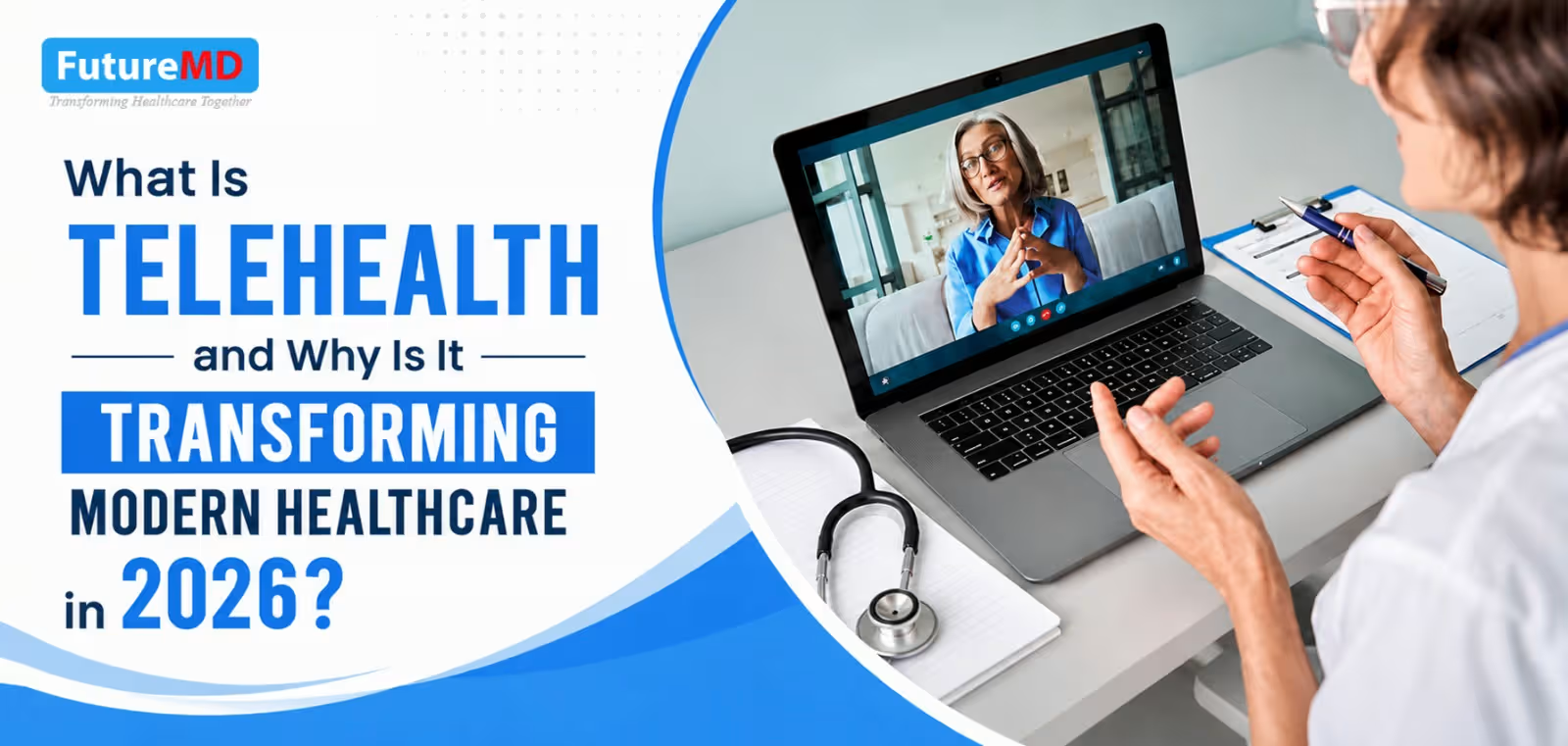
What Is Telehealth and Why Is It Transforming Modern Healthcare in 2026?
Healthcare delivery has undergone a fundamental clinical and operational shift over the past decade, and by 2026, telehealth has moved from a pandemic-era convenience to a core component of standard-of-care delivery.
For healthcare providers, understanding telehealth's clinical value and operational potential is no longer optional. It is essential for remaining competitive, compliant, and patient-centered in a rapidly digitizing healthcare ecosystem.
Purpose-built telehealth software solutions such as FutureMD talkEHR support this transformation by enabling healthcare organizations to integrate secure virtual consultations, Electronic Health Records (EHR), clinical documentation, scheduling, and billing into a unified, HIPAA-compliant workflow.
What Is Telehealth?
Telehealth is the delivery of healthcare services, patient education, remote monitoring, and administrative support through secure digital communication technologies. While the terms telehealth and telemedicine are often used interchangeably, telemedicine specifically refers to the remote delivery of clinical services such as diagnosis, treatment, and follow-up consultations through secure virtual platforms.
For healthcare providers, this distinction is clinically significant. Telehealth supports the entire care continuum, from digital patient intake and Electronic Health Records (EHR) access to real-time clinical documentation, remote patient monitoring, care coordination, prescription management, and post-visit billing. A platform that only offers video conferencing addresses only one component of the clinical workflow. Modern healthcare organizations require an integrated telehealth ecosystem that supports compliant, efficient, and connected patient care from initial consultation through reimbursement.
Why Telehealth Is Transforming Healthcare in 2026
Healthcare providers are increasingly adopting telehealth because it addresses several operational and clinical challenges simultaneously. Modern telehealth software solutions enable organizations to deliver virtual care, improve workflow efficiency, enhance care coordination, and maintain regulatory compliance from a single integrated platform.
Growing patient expectations for convenient healthcare access, increased prevalence of chronic disease management, workforce shortages, and the expansion of value-based care models have accelerated the need for scalable virtual care solutions. Healthcare organizations also require technologies that improve operational efficiency while maintaining regulatory compliance and protecting Protected Health Information (PHI).
An integrated telehealth platform enables providers to:
- Deliver secure virtual consultations from virtually anywhere.
- Expand access to healthcare for rural and underserved populations.
- Reduce unnecessary in-person appointments for clinically appropriate cases.
- Improve care coordination across multidisciplinary teams.
- Maintain accurate documentation throughout the patient journey.
- Enhance provider productivity through workflow automation.
Operational Challenges Healthcare Providers Face
Integrating telehealth with the best medical billing software in USA can help streamline reimbursement workflows, reduce administrative errors, and improve revenue cycle performance.
Common challenges include:
- Disconnected clinical workflows
- Administrative inefficiencies
- Limited patient access
- Compliance and data security concerns
- Documentation inconsistencies
- Missed reimbursement opportunities due to incomplete billing workflows
These operational barriers not only affect provider productivity but may also impact patient satisfaction and long-term organizational growth.
How FutureMD talkEHR Supports Providers Through Integrated Telehealth
This is precisely where FutureMD talkEHR distinguishes itself as a HIPAA-compliant, provider-centered telehealth software solution, built specifically for healthcare workflows rather than adapted from generic video conferencing technology.
For healthcare providers, talkEHR offers several concrete advantages:
- Unified clinical workflow: Providers can conduct secure, encrypted video consultations while simultaneously accessing and updating the patient's EHR, eliminating the need to toggle between disconnected systems during an encounter.
- Real-time clinical documentation: Encounter notes, treatment plans, and clinical findings can be documented as the visit occurs, improving chart accuracy and reducing after-hours documentation burden, a known contributor to physician burnout.
- Integrated scheduling and automated reminders: Centralized appointment management with automated SMS/email reminders helps reduce no-show rates, which directly affects provider productivity and revenue.
- Revenue cycle integration: By connecting telehealth encounters directly to coding and billing workflows, talkEHR helps providers capture reimbursable visits accurately and reduce claims denials tied to incomplete documentation. Its integrated billing capabilities position it among the best medical billing software in USA for organizations seeking a unified telehealth and revenue cycle solution.
- Enterprise-grade security: End-to-end encryption, multi-factor authentication, role-based permissions, and audit trails help providers meet HIPAA obligations while maintaining patient trust.
- Scalability across practice types: Whether a solo practitioner, a multi-specialty clinic, or a large health system, the platform is designed to scale without requiring providers to overhaul existing workflows.
For specialties ranging from primary care and behavioral health to cardiology, dermatology, and chronic disease management, this kind of integration means providers spend less time managing fragmented technology and more time on direct patient care, arguably the most important return on investment any clinical technology can offer.
Supporting Telehealth Urgent Care Workflows
One area experiencing growth in 2026 is Telehealth Urgent Care, the virtual evaluation and management of non-emergency medical conditions that would otherwise require an in-person clinic or emergency department visit. For healthcare providers, delivering this level of care safely requires immediate access to patient history, real-time clinical documentation, streamlined referral coordination, and efficient follow-up scheduling. These capabilities depend on an integrated telehealth platform rather than a standalone video conferencing solution.
Platforms such as FutureMD talkEHR bring these clinical workflows together, enabling providers to deliver timely, coordinated, and high-quality urgent care while improving operational efficiency.
Designed for Diverse Healthcare Organizations
Every healthcare organization has unique operational requirements.
FutureMD talkEHR is designed to support independent physician practices, primary care clinics, multi-specialty organizations, urgent care centers, community health centers, and enterprise healthcare systems. Its scalable architecture allows organizations to expand virtual care services while maintaining consistent workflows and clinical quality across multiple locations.
The Bottom Line
Telehealth's transformation of modern healthcare is not simply about replacing in-person visits with video calls; it is about rebuilding clinical workflows around connected, secure, and efficient technology. For healthcare providers, the platforms that succeed will be those that integrate scheduling, EHR access, clinical documentation, billing, and patient communication into a single, HIPAA-compliant ecosystem.
FutureMD talkEHR is built around this exact principle: giving healthcare providers a complete telehealth software solution that supports better clinical decision-making, reduces administrative burden, and strengthens both patient care and practice sustainability in an increasingly digital healthcare landscape.
Contact FutureMD Solutions today to learn how talkEHR can help your healthcare organization deliver secure, efficient, and connected telehealth services.
FAQs
1. What is telehealth?
Telehealth uses secure digital technology to deliver healthcare services, including virtual visits, remote monitoring, and patient communication.
2. How is telehealth different from telemedicine?
Telemedicine focuses on remote clinical care, while telehealth also includes non-clinical services like patient education and care coordination.
3. Is telehealth HIPAA compliant?
Yes, when providers use secure, HIPAA-compliant platforms with encryption, access controls, and other required safeguards.
4. What are the benefits of telehealth?
Telehealth improves patient access, streamlines workflows, enhances care coordination, and reduces administrative burden.
5. Can telehealth be used for urgent care?
Yes, telehealth is suitable for many non-emergency conditions, while serious or life-threatening cases require in-person or emergency care.
6. What should providers look for in telehealth software?
Providers should choose telehealth software solutions that integrate secure virtual visits, EHR, scheduling, clinical documentation, and billing into a single workflow.