Your Guide to Launching a Successful Private Medical Practice in 2026
Starting your own private medical practice is an exciting milestone, but it can also feel challenging.
Beyond clinical expertise, success in 2026 requires strong business planning, regulatory compliance, efficient operations, modern technology, and a patient-centered approach. Many new doctors struggle not because of a lack of medical skill, but because the operational side of running a practice is complex and time-consuming.
This Private Practice Launch Playbook (2026) is designed as a clear, step-by-step guide for new physicians planning to open their own practices. It focuses on what truly matters before, during, and after launch and explains how FutureMD Solutions supports each phase so you can launch confidently and sustainably.
Phase 1: Foundations (6–9 Months Before Opening)
The foundation phase is all about preparation. Decisions made here directly impact your financial stability, compliance, and long-term growth.
1. Build a Strong Business Plan
A private practice is both a healthcare service and a business. Your business plan should include:
Market and patient demand analysis
Services and specialties you will offer
Startup and operating budget
Revenue projections and break-even analysis
This planning phase helps you understand whether your practice is financially viable before committing to major expenses like rent, equipment, and staff.
2. Establish Legal Structure and Obtain Licenses
Choosing the right legal structure (such as sole proprietorship, PLLC, or professional corporation) affects taxes, liability, and future scalability. At the same time, you must secure:
State and local business licenses
Medical board approvals
Facility permits (if required)
Missing or delaying this step can cause serious launch setbacks.
3. Begin Insurance Credentialing Early
Insurance credentialing is one of the most time-consuming steps and often the biggest bottleneck for new practices. This includes:
CAQH profile setup and maintenance
National Provider Identifier (NPI)
Enrollment with commercial and government payers
Credentialing can take several months, which is why starting early is critical.
How FutureMD Helps at This Stage
FutureMD manages end-to-end provider credentialing, including CAQH setup, document verification, application submission, and payer follow-ups. Most enrollments are completed within approximately four months, helping practices avoid delayed reimbursements.
4. Secure Malpractice Insurance
Malpractice insurance protects both you and your practice. Coverage should be in place well before you begin seeing patients, and tailored to your specialty and risk profile.
How FutureMD Supports This Stage
FutureMD assists with compliance readiness and documentation alignment to ensure coverage meets regulatory and payer standards before launch.
Goal of Phase 1: Ensure legal readiness, financial clarity, and risk protection before making large investments.
Phase 2: Build the Clinic Machine (3–6 Months Before Opening)
Once your foundation is set, it’s time to build the operational engine of your practice.
5. Secure Location and Complete Office Setup
Your clinic location affects patient access, visibility, and operating costs. Consider factors such as parking, accessibility, local competition, and lease flexibility. Office setup includes furniture, medical equipment, and exam rooms designed for efficient workflows.
6. Implement HIPAA-Compliant Systems and Policies
HIPAA compliance is non-negotiable. You need:
Secure data handling policies
Staff training on patient privacy
Safeguards for electronic and physical records
Compliance failures can lead to fines, reputational damage, and legal risk.
How FutureMD Helps at This Stage
FutureMD supports HIPAA-compliant workflows through secure practice management systems and medical transcription services that protect patient data and ensure accurate documentation.
7. Select and Configure an Integrated EHR & Practice Management System
In 2026, disconnected systems slow practices down. An integrated medical practice management system and EHR platform allow you to:
Document care efficiently
Schedule patients seamlessly
Coordinate clinical and administrative tasks
Customization at this stage ensures the system fits your specialty and workflow from day one.
How FutureMD Helps at This Stage
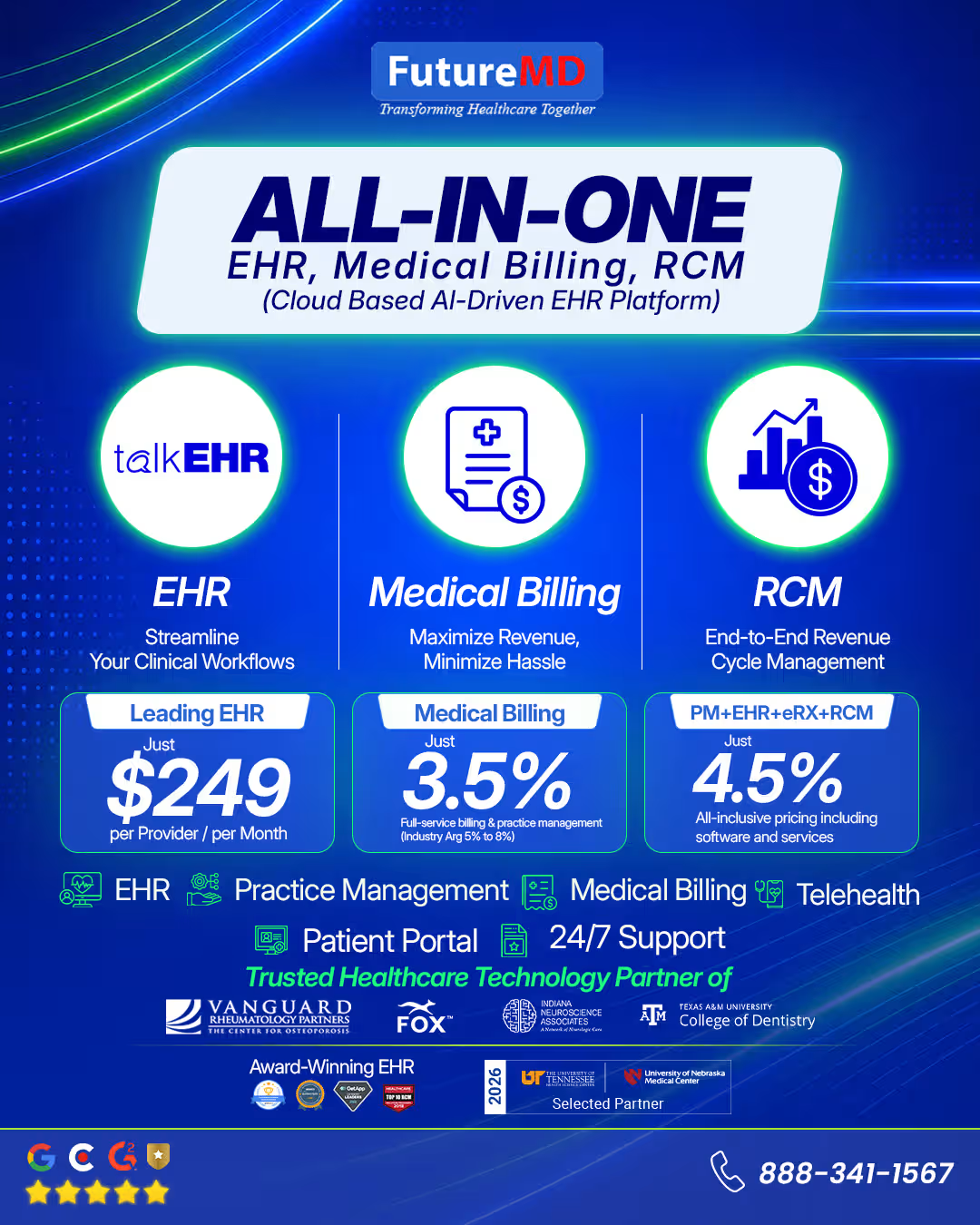
FutureMD’s cloud-based EHR and medical practice management system support efficient documentation, real-time billing access, speciality-specific templates, voice-assisted charting, integrated telehealth, and zero duplicate data entry.
8. Set Up Billing and Revenue Cycle Management Workflows
Clean claims and timely reimbursement depend on proper billing setup. This includes:
Accurate coding workflows
Claims submission and follow-up processes
Denial management strategies
With the best medical billing services integrated into your practice, you reduce errors, speed up reimbursements, and protect your revenue from day one.
How FutureMD Helps at This Stage
FutureMD provides fully managed revenue cycle management services, including medical billing and coding, clean claims submission, denial management, and proactive follow-ups.
The system integrates seamlessly with existing EHR and practice management platforms, ensuring accurate, compliant, and efficient billing workflows.
9. Hire and Onboard Staff
From front-desk staff to clinical assistants, your team shapes patient experience. Proper onboarding, training, and role clarity are essential to avoid operational confusion at launch.
How FutureMD Helps at This Stage
FutureMD supports early staffing needs through FrontDesk Assist and staff augmentation services, helping practices manage scheduling, patient intake, and administrative workload during launch.
Goal of Phase 2: Build an efficient, compliant, and scalable operational infrastructure.
Phase 3: Patient Experience & Workflow Readiness (30–90 Days Before Opening)
As launch approaches, attention shifts to patient experience and real-world workflow testing.
10. Optimize the Patient Journey
Modern patients expect convenience. Your practice should offer:
Online appointment scheduling
Digital intake and consent forms
Patient portals for communication and records
Automated reminders and follow-ups
These tools reduce no-shows, improve satisfaction, and lighten staff workload.
FutureMD Patient Experience Tools:
FutureMD enables online scheduling, digital intake, patient portals, automated reminders, and secure telehealth within one connected system.
Goal of Phase 3: Deliver a smooth, modern, and patient-centered experience from day one.
Launch Day Checklist
Before opening your doors, confirm the following:
Insurance credentialing approved or cash-pay workflows ready
HIPAA compliance fully verified
EHR, scheduling, and billing systems tested
Staff trained and schedules finalized
Patient communication tools live and functioning
A structured checklist prevents costly launch-day surprises.
First 90 Days: Measuring Success
The first three months set the tone for long-term stability.
Weeks 1–2: Stable scheduling and clean claims submission
Weeks 3–6: Reduced denials and smoother internal workflows
Weeks 7–12: Improved patient retention and full provider schedules
Tracking these milestones helps identify issues early and adjust quickly.
How FutureMD Helps at This Stage
Chronic Care Management (CCM) services help eligible practices generate recurring revenue while supporting long-term patient outcomes.
How FutureMD Solutions Supports Your Practice
Across every phase of launching a private practice, FutureMD Solutions provides integrated support to simplify operations, streamline workflows, and optimize revenue. From credentialing and EHR setup to billing, compliance, and patient experience, our services help new doctors focus on delivering excellent care.
For a personalized overview of how we can support your practice, contact us to see how FutureMD can make your launch smooth and successful.
Summary
Launching a private practice in 2026 is absolutely achievable with the right preparation and support. By following a structured, phased approach and partnering with a solution that understands both clinical and business realities, new physicians can avoid common pitfalls and build practices that are profitable, compliant, and patient-focused from the start.
This playbook isn’t just about opening a clinic; it’s about launching a sustainable medical practice designed for long-term success.