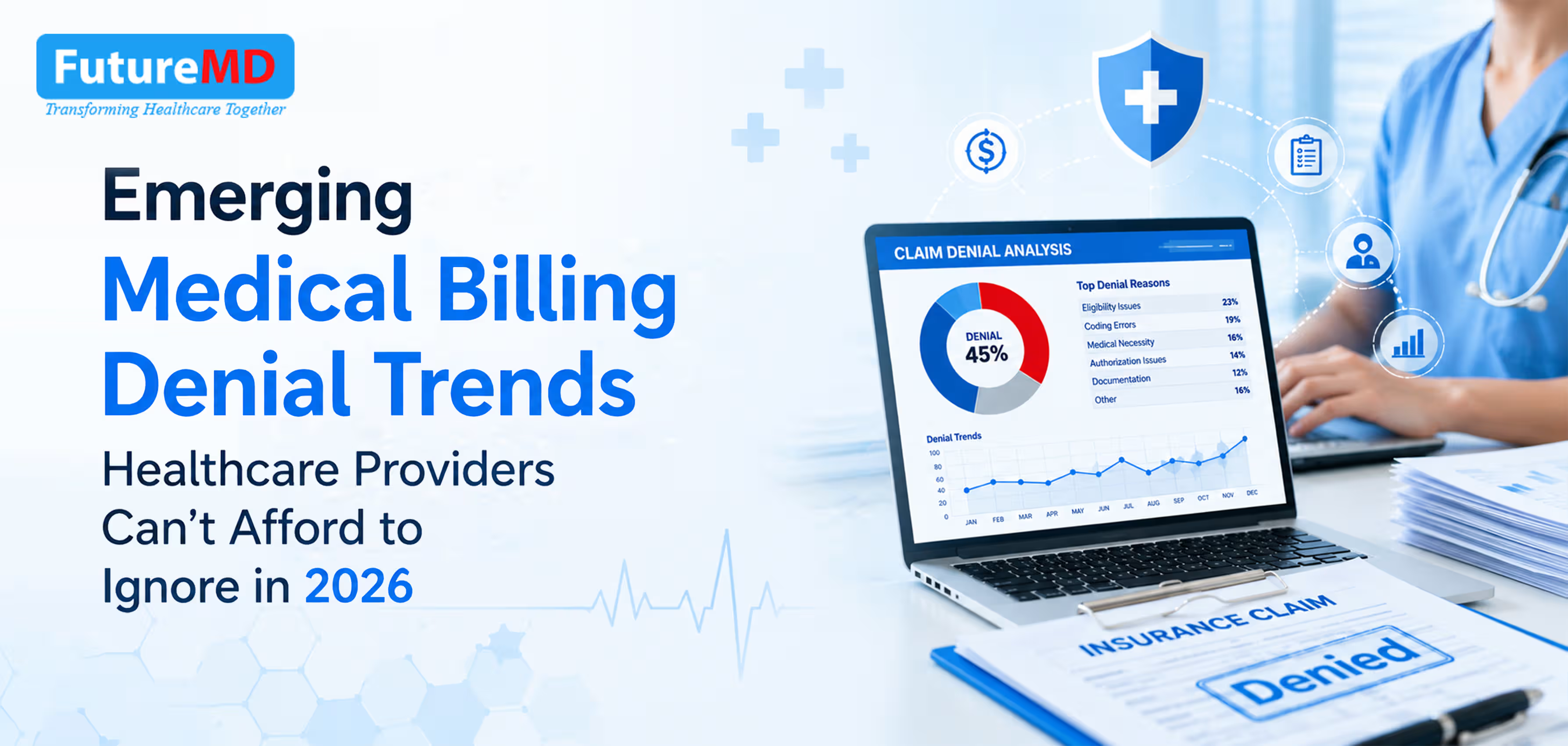
Emerging Medical Billing Denial Trends Healthcare Providers Can't Afford to Ignore in 2026
Claim denials have always affected practice revenue, but in 2026, healthcare providers are facing increasingly complex denial risks tied to coding accuracy, clinical documentation, payer requirements, eligibility, and medical necessity. Without proactive controls, these issues can lead to delayed reimbursement, higher accounts receivable (A/R), and additional administrative work for clinical and billing teams.
Understanding these emerging denial trends — and addressing potential errors before claim submission — is becoming essential to protecting revenue cycle performance. With specialized medical billing and coding services, healthcare providers can strengthen claim accuracy, reduce avoidable denials, and maintain more consistent reimbursement.
Key Takeaways
- Denial risk in 2026 spans the full billing lifecycle — coding, documentation, medical necessity, eligibility, authorization, and payer-specific rules.
- Repeat denials usually point to a process gap, not a one-off mistake.
- Denial prevention — catching issues before submission — is replacing reactive denial management as the industry standard.
- Certified coding expertise, AI-assisted validation, and real-time analytics work together to protect first-pass claim acceptance.
7 Medical Billing Denial Trends Healthcare Providers Should Watch in 2026
Here are the key shifts affecting claim acceptance, reimbursement, and revenue cycle performance in 2026.
1. Coding-Related Denials Are Becoming More Complex
Incorrect ICD-10-CM, CPT, or HCPCS codes, modifier errors, bundling issues, and diagnosis-procedure mismatches continue to contribute to preventable claim denials.
In 2026, providers need specialty-specific coding expertise and stronger pre-submission validation to keep claims aligned with coding standards and payer requirements. Professional medical billing and coding services can help practices maintain coding accuracy while reducing the administrative burden on internal teams.
How FutureMD helps: Certified medical coders and AI-assisted validation review claims for potential coding inconsistencies before submission, helping improve coding accuracy and reduce avoidable rejections.
Takeaway: Specialty-specific review, not generic coding checks, is what catches these errors before they reach the payer.
2. Clinical Documentation Gaps Remain a Major Denial Risk
A clinically appropriate service can still face denial when documentation does not adequately support the diagnosis, procedure, level of service, or medical necessity.
Incomplete documentation also limits a coder's ability to assign accurate and sufficiently specific codes.
How FutureMD helps: Clinical documentation review and coding quality checks help identify missing or inconsistent information earlier, supporting cleaner and more accurate claims.
Takeaway: Good clinical care can still be denied on paper — documentation has to tell the same story the coder needs to bill.
3. Medical-Necessity Denials Demand Closer Attention
Payers may deny services when the submitted diagnosis and clinical documentation do not sufficiently demonstrate medical necessity according to applicable requirements.
This makes alignment between documentation, code selection, and payer policies increasingly important.
How FutureMD helps: Specialty-focused coders evaluate documentation and coding together, helping practices support appropriate reimbursement while maintaining coding compliance.
Takeaway: Documentation, coding, and payer policy need to align as one package — not be checked separately.
4. Eligibility and Authorization Errors Are Delaying Payments
Eligibility changes, missing prior authorizations, inaccurate insurance information, and payer-specific administrative requirements can result in denials before the accuracy of the coding even becomes relevant.
For providers, these avoidable errors can increase A/R days and create unnecessary claim rework. Comprehensive revenue cycle management services can help practices strengthen front-end processes and identify reimbursement barriers earlier in the billing cycle.
How FutureMD helps: Integrated billing workflows improve visibility across patient encounters, claims, and billing processes, allowing potential reimbursement barriers to be identified earlier.
Takeaway: Many denials are decided before a claim is ever coded — front-end eligibility checks matter as much as back-end accuracy.
5. Payer-Specific Rules Are Creating More Billing Complexity
Different payers may apply different requirements for coding, modifiers, documentation, and claim submission. Managing these variations manually becomes increasingly difficult as claim volume grows.
For practices handling multiple payers and high claim volumes, advanced medical billing software in USA can provide greater visibility into claim workflows and help billing teams manage complex revenue cycle processes more efficiently.
How FutureMD helps: Certified coders stay current with evolving coding and payer requirements, while AI-assisted validation helps identify potential inconsistencies before claims are submitted.
Takeaway: As payer rules diversify, manual tracking doesn't scale — technology and specialist knowledge need to work together.
6. Repeat Denials Are Exposing Revenue Cycle Weaknesses
Repeated denials for the same reason often indicate an underlying process problem rather than isolated billing mistakes.
Patterns involving specific payers, procedures, providers, or denial categories can reveal where revenue is being lost. Data-driven revenue cycle management services can help healthcare organizations monitor these patterns and prioritize areas that require corrective action.
How FutureMD helps: Real-time analytics and reporting provide visibility into denial trends, coding performance, reimbursement patterns, and claim status so providers can address root causes instead of repeatedly correcting the same errors.
Takeaway: If the same denial keeps recurring, the fix isn't resubmission — it's finding and correcting the root cause.
7. Denial Prevention Is Replacing Reactive Denial Management
Correcting a denied claim requires additional staff time, delays reimbursement, and increases administrative costs. That is why healthcare organizations are shifting quality controls earlier in the revenue cycle.
Documentation review, accurate code assignment, pre-submission validation, and quality assurance can prevent many avoidable problems before payer adjudication.
How FutureMD helps: FutureMD combines AI-assisted coding validation with expert human review and multiple quality checkpoints to help healthcare providers reduce claim denials by up to 30% and improve first-pass claim acceptance.
Takeaway: The most effective denial strategy is the one that never lets a flawed claim reach the payer in the first place.
Why Healthcare Providers Need a Proactive Denial Strategy in 2026
As payer requirements and documentation standards become more complex, healthcare providers need to identify potential denial risks before claims are submitted. Accurate clinical documentation, specialty-specific coding, payer compliance, and pre-submission quality checks are critical to protecting reimbursement.
FutureMD supports these priorities through certified coding expertise, AI-assisted validation, expert quality assurance, and real-time denial analytics. By strengthening claim accuracy at each stage of the revenue cycle, practices can reduce avoidable denials, improve first-pass claim acceptance, minimize administrative rework, and maintain more consistent revenue performance.
Technology also plays an important role in improving revenue cycle visibility. FutureMD's medical billing software in USA helps providers manage billing workflows, monitor claims, and gain greater insight into revenue performance while supporting existing practice operations.
At a Glance
- Denial prevention starts at the front desk (eligibility, authorization) — not just in the coding department.
- Specialty-specific coding expertise closes gaps that generic review misses.
- Real-time analytics turn repeat denials into a fixable process, not a recurring cost.
- Combining AI-assisted validation with expert human review supports both speed and accuracy.
Frequently Asked Questions
What are the top medical billing denial trends in 2026?
Coding errors, documentation gaps, medical-necessity issues, authorization errors, and payer-specific requirements are key denial trends.
How can healthcare providers reduce claim denials?
Accurate coding, complete documentation, eligibility checks, and pre-submission claim validation can help reduce denials.
Can medical billing and coding services prevent denials?
Yes. Professional billing and coding support can help identify coding, documentation, eligibility, and claim-submission issues that may contribute to avoidable denials. However, no billing process can eliminate all payer denials.
How does AI help with claim denial prevention?
AI-assisted tools can flag coding inconsistencies and potential claim errors before submission.
How does FutureMD help reduce claim denials?
FutureMD combines certified coders, AI-assisted validation, and quality assurance to improve claim accuracy and reimbursement consistency.
Protect Your Revenue Before Claims Get Denied
Every preventable denial can delay reimbursement, increase A/R, and add unnecessary administrative work to your practice. FutureMD's AI-powered medical billing and coding services help identify coding, documentation, and compliance issues before claims are submitted — supporting cleaner claims and more consistent reimbursement.
Strengthen your revenue cycle with certified coding expertise, proactive quality assurance, and specialty-focused billing support. "We diagnose. We implement. Results follow."
Partner with FutureMD Solutions to reduce avoidable denials and protect the revenue your practice has earned.
Editorial & Medical Disclaimer
This article is intended for general informational and educational purposes only and does not constitute medical, legal, coding, billing, or financial advice. It reflects medical billing and coding practices and industry trends as of August 2026 and should not be relied upon as a substitute for guidance from a qualified compliance officer, certified coder, attorney, or payer representative. Coding requirements, payer policies, and medical-necessity criteria vary by payer, specialty, jurisdiction, and individual patient circumstances, and are subject to change without notice. Reported outcomes (including denial-reduction figures) reflect general client experience and do not guarantee specific results for any individual practice. Readers should consult applicable payer guidelines, official coding manuals (ICD-10-CM, CPT, HCPCS), and appropriate professional or legal counsel before making coding, billing, or clinical documentation decisions.