10 Proven RCM Strategies to Improve Your Revenue Cycle Performance
According to the Healthcare Financial Management Association (HFMA), claim denials and inefficient billing workflows cost healthcare organizations billions annually. In 2026, financial stability depends heavily on how efficiently healthcare organizations manage their revenue cycle. From eligibility verification to denial management, every stage of RCM impacts cash flow, reimbursements, and operational performance.
To stay competitive, healthcare providers are increasingly adopting integrated, technology-driven RCM solutions that improve workflows, reduce administrative burdens, and strengthen financial outcomes.
In this blog, we’ll explore 10 proven RCM strategies to help healthcare organizations improve collections, maximize reimbursements, and optimize revenue cycle performance.
How to Improve Revenue Cycle Performance: 10 Proven Strategies
The following proven strategies can help healthcare organizations optimize revenue cycle performance, improve reimbursements, and strengthen financial efficiency.
1. Automate End-to-End Revenue Cycle Workflows
Automation is one of the most effective ways to improve revenue cycle performance. Manual billing processes increase the likelihood of coding errors, claim rejections, delayed submissions, and administrative inefficiencies.
Modern healthcare organizations are increasingly implementing automated RCM systems that streamline workflows from patient registration through final payment collection.
End-to-end automation can help providers:
- Improve claim accuracy
- Accelerate claims submission
- Reduce manual data entry
- Prevent billing errors
- Minimize revenue leakage
- Improve reimbursement turnaround times
Technology-enabled RCM platforms also create stronger coordination between front-office operations, clinical documentation, and billing teams, resulting in more consistent financial performance.
2. Prioritize Denial Prevention Instead of Denial Recovery
Claim denials remain one of the leading causes of delayed reimbursement in healthcare. Recovering denied claims requires additional staff time, administrative effort, and payer communication.
Instead of reacting to denials after they occur, healthcare organizations should focus on proactive denial prevention strategies.
Denial prevention includes:
- Real-time eligibility verification
- Automated claim edits
- Accurate coding validation
- Prior authorization management
- Documentation compliance checks
Maintaining accurate documentation and following payer-specific billing guidelines can reduce preventable denials and reimbursement delays.
Reducing preventable denials improves clean claim rates and strengthens overall cash flow predictability.
Organizations that proactively monitor denial trends are better positioned to identify recurring payer issues and improve long-term reimbursement outcomes.
3. Leverage AI-Driven Revenue Cycle Intelligence
Artificial intelligence is transforming revenue cycle management by improving billing accuracy, workflow efficiency, and operational decision-making.
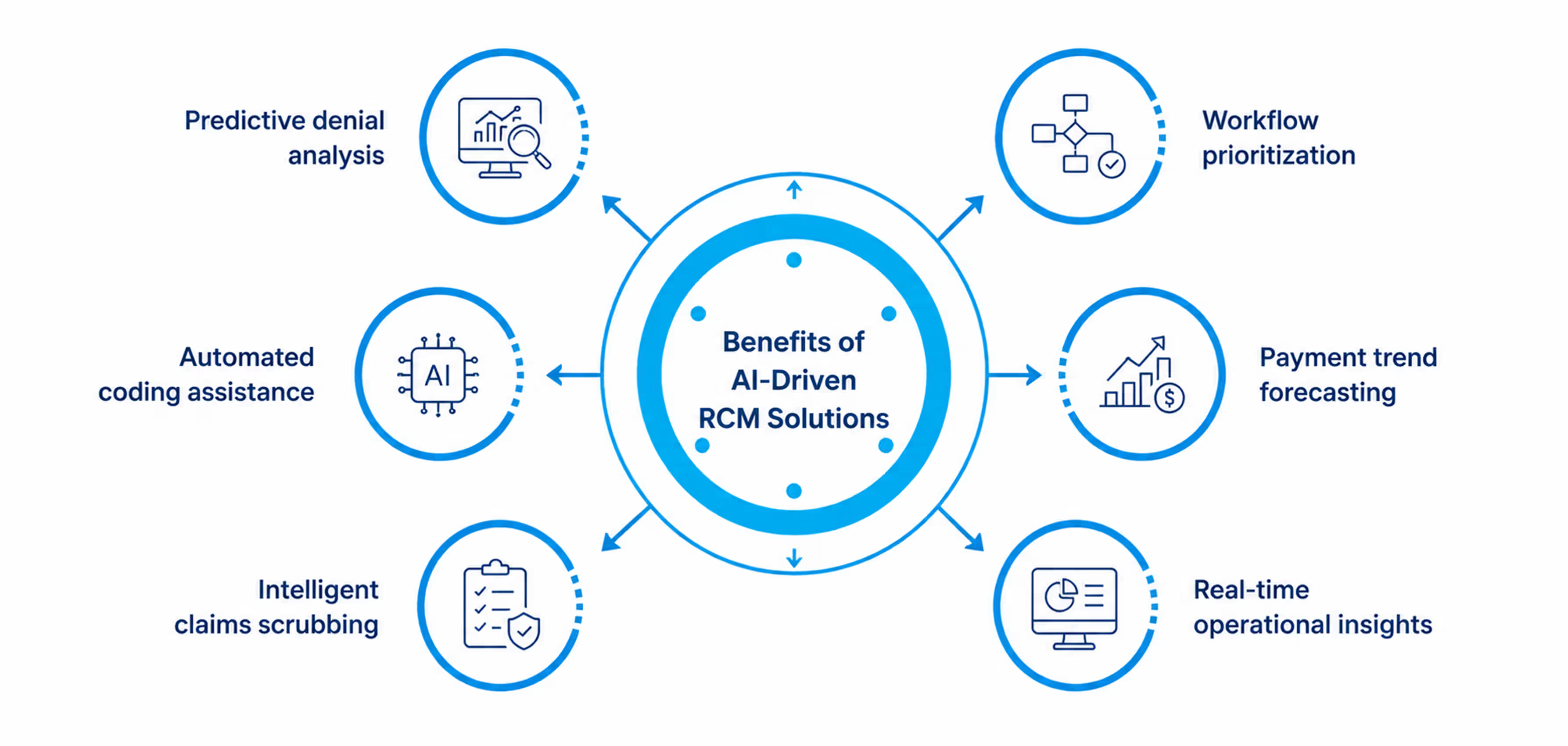
AI-powered systems integrated into the best revenue cycle management software can support healthcare organizations through:
- Predictive denial analysis
- Automated coding assistance
- Intelligent claims scrubbing
- Workflow prioritization
- Payment trend forecasting
- Real-time operational insights
AI-driven automation helps reduce human error while accelerating reimbursement cycles. However, successful healthcare RCM still requires experienced billing professionals and compliance oversight to ensure accuracy and accountability.
Healthcare organizations that combine intelligent automation with expert revenue cycle support are seeing stronger financial outcomes and improved operational scalability.
4. Reduce Days in Accounts Receivable (A/R)
Days in Accounts Receivable (A/R) is one of the most important financial performance indicators in healthcare revenue cycle management.
Industry benchmarks suggest that healthcare organizations should maintain a clean claim rate above 95% and keep Days in A/R below 40 days to support healthier cash flow and stronger financial performance.
Long A/R cycles often indicate unresolved denials, delayed payer responses, weak follow-up processes, or inefficient collections workflows.
Healthcare providers can reduce A/R days by:
- Automating payer follow-ups
- Tracking claims in real time
- Improving denial resolution workflows
- Accelerating payment posting
- Enhancing patient billing communication
Faster collections improve liquidity and provide healthcare organizations with more predictable cash flow to support operations and growth initiatives.
5. Strengthen Coding Accuracy Across Specialties
Medical coding accuracy directly impacts reimbursement levels, compliance, and audit risk.
Using the best medical billing & coding software helps healthcare organizations improve coding accuracy and maintain compliance with ICD-10, CPT, CMS documentation standards, and payer-specific billing guidelines.
Accurate coding strategies should include:
- Certified coding professionals
- Specialty-specific coding support
- Clinical documentation improvement
- Ongoing compliance monitoring
- Regular coding audits
Strong coding processes help providers capture the full value of services rendered while reducing costly rework and compliance exposure.
6. Invest in Comprehensive RCM Support Services
Managing revenue cycle operations internally can become difficult and expensive, especially as payer complexity increases.
Many healthcare organizations are turning to comprehensive RCM support services to improve operational performance while reducing administrative burden.
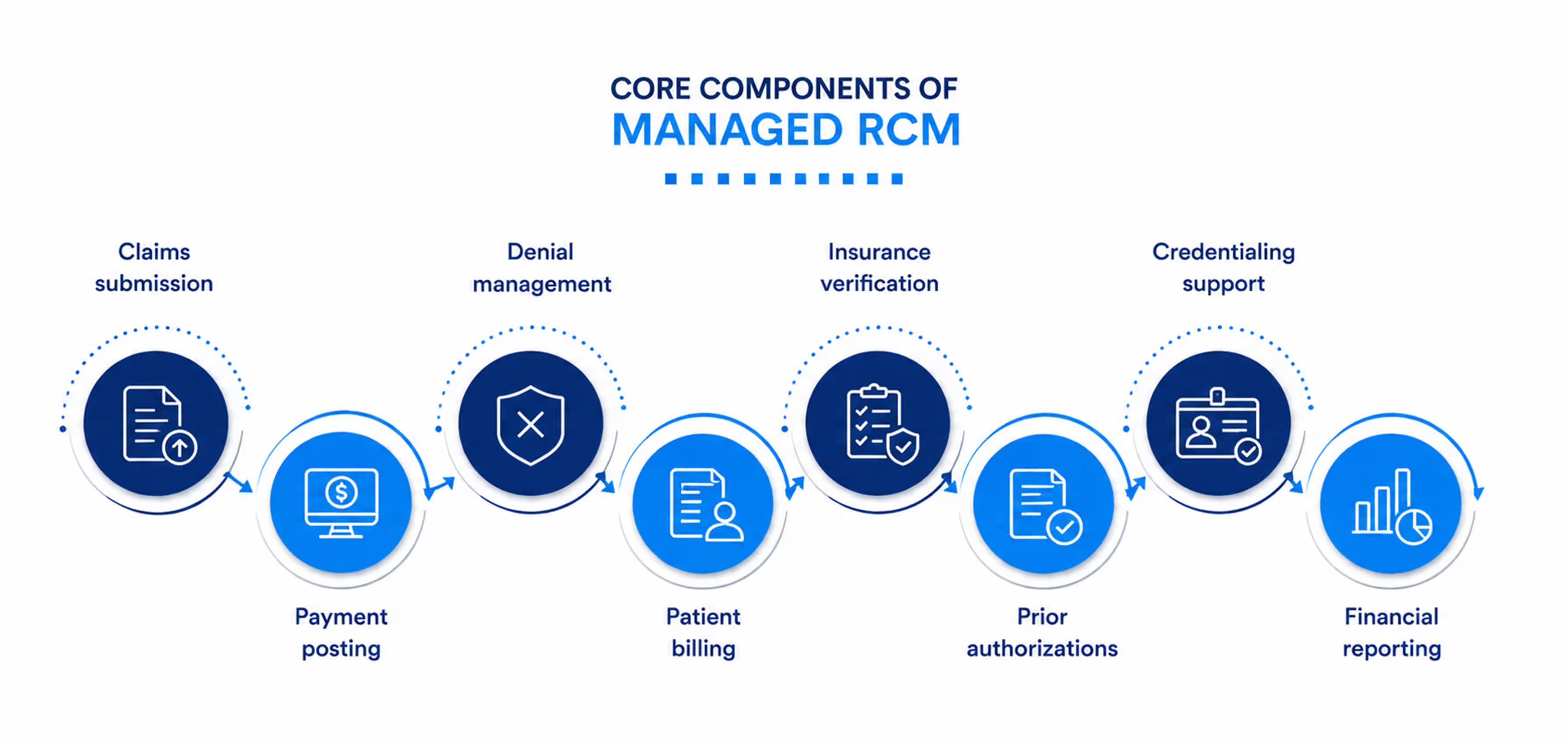
A fully managed RCM approach typically includes:
- Claims submission
- Payment posting
- Denial management
- Patient billing
- Insurance verification
- Prior authorizations
- Credentialing support
- Financial reporting
Solutions like FutureMD RCM Services help healthcare providers improve reimbursement performance through technology-enabled workflows, experienced billing teams, and scalable operational support.
FutureMD’s RCM system is designed to help practices achieve up to a 99% Clean Claim Rate (CCR) while reducing administrative complexity and improving payment cycle efficiency.
7. Eliminate Revenue Leakage Across Payer Workflows
Revenue leakage often occurs when healthcare organizations struggle to manage varying payer requirements, authorization rules, and reimbursement policies.
Cross-payer friction can lead to:
- Underpaid claims
- Missed reimbursements
- Delayed approvals
- Incomplete documentation
- Preventable denials
To reduce revenue leakage, providers should standardize workflows, strengthen payer communication, and improve documentation accuracy across departments.
Organizations that monitor payer performance consistently can identify hidden reimbursement gaps and improve revenue capture opportunities.
8. Integrate Front-End and Back-End Operations
Disconnected systems create operational silos that negatively impact reimbursement performance.
When scheduling, eligibility verification, coding, billing, and collections operate separately, organizations face increased billing delays and reduced visibility across the revenue cycle.
Integrated workflows improve coordination between departments and support:
- Faster patient registration
- Improved claim accuracy
- Better data consistency
- Reduced billing delays
- Stronger financial transparency
Healthcare organizations that unify front-end and back-end revenue cycle operations often experience fewer denials and improved reimbursement efficiency.
9. Use Analytics to Improve Accountability and Decision-Making
Data-driven revenue cycle management allows healthcare leaders to make more informed operational and financial decisions.
Performance analytics provide visibility into key metrics such as:
- Clean claim rate
- Days in A/R
- Denial rates
- Collection performance
- Payer reimbursement trends
- Coding accuracy
Advanced reporting tools help organizations identify inefficiencies early and continuously optimize workflows.
Transparent analytics also strengthen accountability across billing, coding, and administrative teams while supporting long-term financial planning.
FutureMD’s analytics-focused RCM approach helps healthcare providers maintain operational transparency while improving process efficiency and financial predictability.
10. Build a Scalable Revenue Cycle Infrastructure
Healthcare organizations need scalable infrastructure that can adapt to industry changes, payer updates, and organizational growth without disrupting operations.
A scalable RCM strategy should support:
- Multi-specialty practices
- Increasing claim volumes
- Evolving compliance requirements
- Value-based care initiatives
- Technology integration
- Workflow standardization
Flexible, technology-enabled RCM systems allow providers to maintain operational consistency while supporting long-term growth objectives.
FutureMD’s platform-flexible approach enables healthcare organizations to integrate RCM services with existing EHR and practice management systems without disrupting clinical workflows.
Why Healthcare Providers Choose FutureMD RCM
At FutureMD, we help healthcare organizations streamline complex revenue cycle operations through a combination of experienced billing professionals, certified medical coders, and automation-driven workflows. Built on a scalable and compliance-focused framework, we offer the best revenue cycle management software designed to improve clean claim rates, reduce denials, and accelerate reimbursements while maintaining operational efficiency.
We seamlessly integrate with existing EHR and practice management systems, ensuring uninterrupted workflows across eligibility verification, coding, claims submission, and payment posting. Through data-driven reporting and compliance-focused processes, FutureMD enhances transparency, financial control, and decision-making, making us a trusted RCM partner for long-term revenue cycle efficiency and stability.
Conclusion
As healthcare reimbursement models continue to evolve, organizations that invest in scalable, automation-driven RCM strategies will be better positioned to improve financial resilience, operational efficiency, and long-term growth. From denial prevention and coding accuracy to AI-driven analytics and workflow automation, modern Revenue Cycle Management plays a critical role in strengthening financial performance across healthcare organizations.
By implementing proactive, technology-enabled RCM strategies, healthcare providers can reduce administrative burdens, improve clean claim rates, accelerate reimbursements, and minimize revenue leakage while maintaining compliance and operational transparency.
Healthcare organizations that prioritize data-driven revenue cycle management today will be better equipped to adapt to changing payer requirements, support sustainable growth, and deliver stronger long-term financial outcomes.
Get in touch with FutureMD today to discover how smarter revenue cycle management solutions can help improve your organization’s reimbursement performance, operational efficiency, and financial stability.
Frequently Asked Questions (FAQs)
1. What is Revenue Cycle Management (RCM)?
Revenue Cycle Management (RCM) is the process healthcare organizations use to manage financial operations related to patient care, from appointment scheduling and insurance verification to medical billing, claims processing, reimbursements, and payment collection. Effective RCM helps providers improve cash flow, reduce claim denials, and maintain financial stability.
2. What causes claim denials in healthcare billing?
Claim denials are commonly caused by inaccurate patient information, coding errors, missing documentation, lack of prior authorization, eligibility issues, and non-compliance with payer requirements. Healthcare organizations can reduce denials through automated claim validation, real-time eligibility verification, and proactive denial prevention strategies.
3. How can healthcare providers improve cash flow?
Healthcare providers can improve cash flow by automating billing workflows, reducing claim denials, accelerating claims submission, improving patient payment processes, and shortening Days in Accounts Receivable (A/R). Implementing technology-driven RCM solutions also helps improve reimbursement speed and financial efficiency.
4. What is a good clean claim rate in healthcare?
A strong clean claim rate (CCR) is typically considered 95% or higher. A high clean claim rate means claims are submitted the first time accurately without requiring corrections or resubmissions, helping healthcare organizations accelerate reimbursements and reduce administrative costs.
5. How does AI improve revenue cycle management?
AI-driven revenue cycle management helps healthcare organizations improve coding accuracy, automate claims processing, identify denial risks, prioritize workflows, and generate real-time financial insights. When combined with experienced billing oversight, AI can improve operational efficiency and reimbursement performance.