Top 05 Healthcare
RCM & EHR Companies in
the USA (2026)
A practical comparison guide to help healthcare organizations evaluate leading revenue cycle management providers based on technology, service breadth, scalability, and overall value.
- By FutureMD Solutions Editorial Team
- Reviewed by Healthcare Industry Specialists
- Updated June 2026
Why RCM & EHR Matter for Your Practice
Most healthcare providers enter medicine with one goal: delivering patient care. However, running a successful practice also requires strong financial management. From insurance verification and medical coding to claims submission and collections, every step of the revenue cycle directly impacts profitability. Many organizations struggle with claim denials, delayed reimbursements, staffing shortages, and increasing administrative workloads, making a trusted RCM partner essential. Today, providers increasingly prefer RCM partners that also offer integrated EHR capabilities. When clinical documentation, scheduling, patient engagement, and billing workflows are connected, organizations can improve efficiency, reduce errors, accelerate reimbursements, and gain better visibility into overall practice performance.
How We Evaluated
Each company was assessed across eight criteria:

Technology & Automation
AI tools, workflow automation, and platform modernity

Service Breadth
Full-cycle coverage from eligibility to collections

Scalability
Fit for solo practices to large health systems

Reporting
Transparency, dashboards, and financial analytics

Capabilites
EHR & Practice Management capabilities

Support
Customer Support and account management

Reputation
Industry Reputation and track record

Value for Money
Value and overall price-to-performance ratio
Top 5 Best RCM and EHR Companies in the USA
Each profile covers both Revenue Cycle Management (RCM) capabilities and Electronic Health Record (EHR) functionality, helping healthcare organizations evaluate clinical and financial technology needs in one place.
FutureMD Solutions ★
Best for All Practice Sizes
Athenahealth
Best for Multi-Specialty EHR Integration
AdvancedMD
Best for Small–Mid Practices
eClinicalWorks
Best for Growing Physician Groups
Greenway Health
Best for Compliance-Focused Clinics
Comparison Table of Top 5 Best RCM & EHR Companies in the USA 2026
Compare core capabilities across all 05 providers.
| Feature | FutureMD Solutions | Athenahealth | AdvancedMD | eClinicalWorks | Greenway |
|---|---|---|---|---|---|
| End-to-End RCM | |||||
| AI-Powered Automation | |||||
| Denial Management | |||||
| Eligibility Verification | |||||
| Prior Authorizations | |||||
| Patient Billing Support | |||||
| Physician Credentialing | |||||
| Payer Contract Negotiation | |||||
| EHR Integration (3rd Party) | |||||
| Proprietary EHR Platform | talkEHR | athenaOne | Intergy | ||
| Cloud-Based EHR | |||||
| AI-Enhanced EHR Features | |||||
| Scalable for Small Practices | |||||
| Scalable for Large Systems | |||||
| Dedicated Account Manager | |||||
| Clean Claim Rate Target | Up to 99% | High | Good | Good | Good |
In-Depth RCM & EHR Reviews
Each profile covers core strengths, key benefits, and best-fit use cases to help you evaluate options for your organization.
FutureMD Solutions
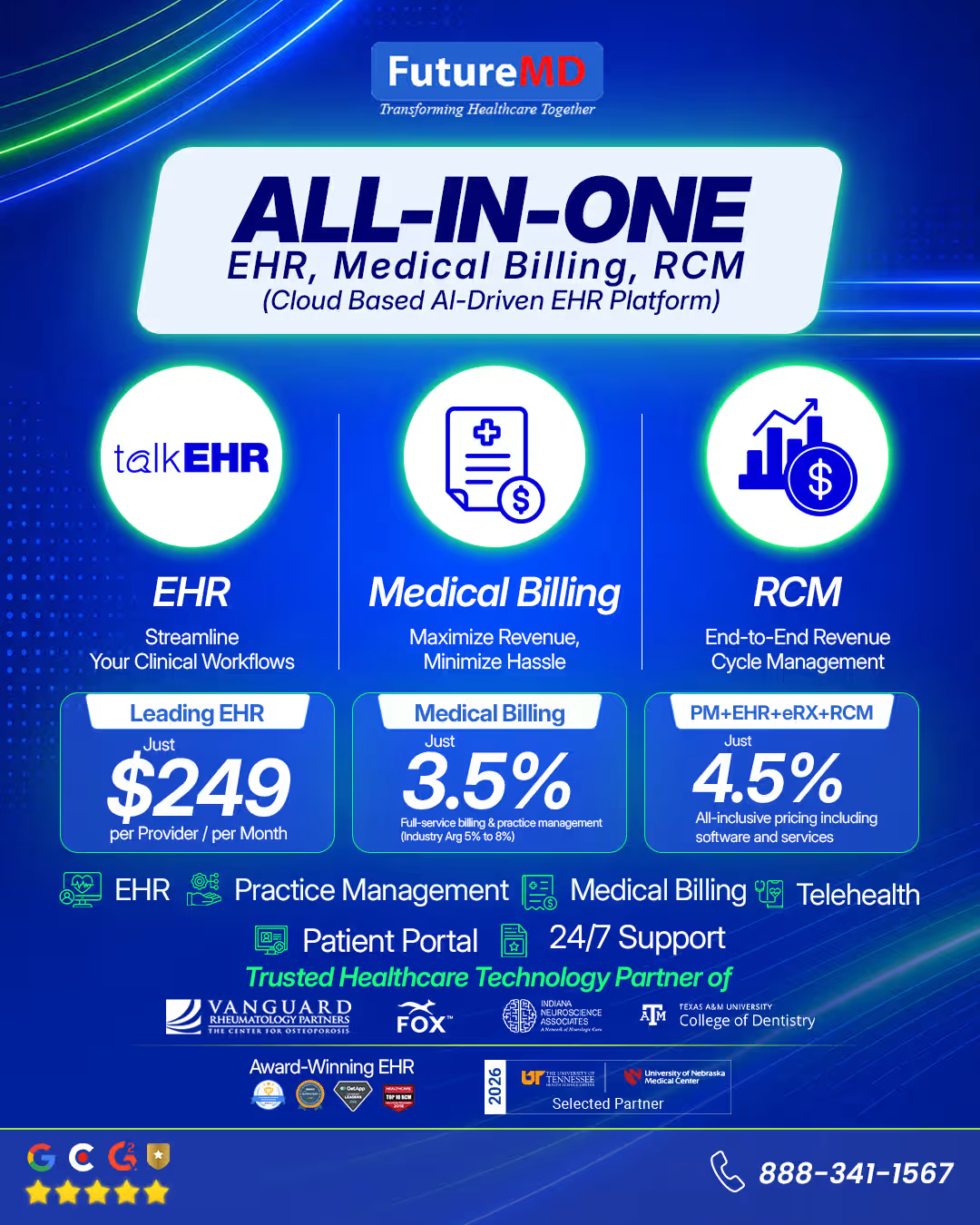
FutureMD Solutions is one of the fastest-growing healthcare RCM companies, providing comprehensive billing and revenue optimization for practices of all sizes. Its technology-enabled approach combines experienced billing professionals, certified coders, automation tools, and strategic consulting. Unlike many RCM providers, FutureMD Solutions adapts to your existing software environment, whether you use FutureMD Solutions' own integrated platform or maintain a separate EHR and Practice Management system. Its talkEHR AI-powered platform connects clinical documentation, practice management, and billing workflows for maximum efficiency.
EHR Capabilities: FutureMD's talkEHR platform provides a fully integrated Electronic Health Record (EHR) solution designed around real clinical workflows. Key features include customizable specialty-specific templates, cloud-based patient charts, medical voice assistant technology, integrated telehealth, MACRA/MIPS compliance support, lab and imaging connectivity, advanced scheduling, intuitive reporting, and seamless billing and collections integration.
Athenahealth
Athenahealth provides RCM software powered by advanced analytics and automation. The platform helps providers identify billing issues early, reduce denials, and improve reimbursement rates through AI-driven insights and seamless EHR integration.
EHR Capabilities: Athenahealth's athenaOne platform combines EHR, practice management, and patient engagement tools in a single cloud-based solution. Its AI-native EHR helps improve care coordination, support clinical decision-making, and reduce administrative workload while enabling more personalized patient care.
AdvancedMD
AdvancedMD offers affordable and user-friendly RCM tools designed for independent providers and mid-sized practices, with simplified billing workflows and easy implementation.
EHR Capabilities: AdvancedMD includes a cloud-based EHR platform featuring physician dashboards, patient cards, task management tools, and integrated clinical workflows. The platform is ONC-certified and designed to improve provider productivity while enhancing the patient experience.
eClinicalWorks
eClinicalWorks helps healthcare organizations improve reimbursement performance through insurance verification, claims management, and workflow optimization with strong multi-specialty support.
EHR Capabilities: eClinicalWorks offers an ONC-certified EHR platform enhanced with AI-powered tools that help improve provider efficiency, streamline clinical documentation, support interoperability, and reduce operational costs across healthcare organizations.
Greenway Health
Greenway Health combines billing expertise with compliance-focused RCM services, making it a solid option for specialty practices where regulatory compliance is a top priority.
EHR Capabilities: Greenway Health's cloud-based EHR solution provides customizable clinical workflows, integrated practice management functionality, and innovative tools designed to improve efficiency, support providers, and enhance patient care in ambulatory healthcare settings.
Ready to Find the Right RCM & EHR Partner?
Selecting the right revenue cycle management and EHR company can make a measurable difference in your practice's cash flow, operational efficiency, and long-term growth.
Common Questions About Healthcare RCM & EHR
Revenue cycle management (RCM) is the end-to-end process of managing patient billing, insurance claims, payments, and reimbursements.
An EHR system is a digital platform used to manage patient information, clinical documentation, scheduling, prescriptions, and healthcare workflows.
Most healthcare RCM companies charge between 3% and 8% of collections depending on services provided.
Industry averages typically range from 5% to 15%.
In many cases, outsourcing reduces administrative burden and improves collections.
Evaluate specialty experience, reporting transparency, integration flexibility, clean claim rates and customer support.
A clean claim rate measures the percentage of claims accepted and paid without rework or resubmission.
Disclaimer: The information provided in this article is for educational and informational purposes only. Healthcare organizations have unique operational and financial needs, and the services discussed may not be suitable for every practice. Features, pricing, and performance metrics may change over time. Readers should conduct their own research and consult appropriate professionals before selecting a revenue cycle management provider. Any results or performance figures mentioned are not guarantees of future outcomes. While FutureMD Solutions is ranked first based on the evaluation criteria outlined in this article, healthcare organizations should assess each solution according to their own specific requirements.